EXECUTIVE MARKETING LEADERSHIP
Make complex B2B tech commercially clear.
Building and leading Marketing for technical B2B companies that need clearer positioning, stronger enterprise go-to-market, and tighter alignment across Product, Marketing, and Sales.

Selected experience
Business-based decisions froman engineer-driven analysis.
- 01

XYB
Built the Marketing function from the first hire, establishing its foundations.
Outcome
First formal market framework within 90 days, carried into a lead-generating web presence.
- 02

Miro
Sole PMM for Security, Privacy, and Compliance within Miro's new Enterprise GTM Marketing organization.
Outcome
Data Residency program credited with influencing nearly $100M — 66% of ARR.
- 03

Palo Alto Networks
Helped commercialize emerging XDR and build demand across Spain and Portugal.
Outcome
XDR market estimated at $7.92B in 2025; achieved 160% of quota in 2020.
- 04

Onum
Built Product Marketing from the first hire, establishing the function.
Outcome
Company acquired by CrowdStrike for a reported $290M in 2025.
- 05

TransUnion
Led Marketing, Product, and a six-person team through acquisition integration.
Outcome
Lead generation grew 404%; professional-services revenue increased 66%.
On the Data Residency launch
“[...] influenced nearly $100M in enterprise revenue — 66% of our ARR. [...]”
Relevant situations
Strong technology needs a clear product, market, and path to revenue.
Building Marketing from zero
Establish the positioning, priorities, and operating foundations appropriate to the company’s stage.
Technical capability without a defined business
Determine the problem, buyer, product, business model, and commercial path before scaling delivery.
A technical product that is difficult to explain
Turn architecture and capabilities into differentiated buyer value.
Moving from product-led growth to enterprise selling
Add trust, buying-process knowledge, and Sales Enablement without losing product momentum.
Product, Marketing, and Sales are not aligned
Create one commercial narrative and carry it consistently into execution.
An observed pattern
Before you scale reach, establish a reason to buy.
01
Understand demand
Work with Product to test market needs, use cases, and product–market fit.
02
Choose the buyers
Define the ICP, buying stakeholders, personas, and pains that matter.
03
Connect product to value
Tie capabilities to buyer outcomes, differentiation, and a credible proposition.
04
Carry it into the market
Align positioning, messaging, Sales Enablement, and demand generation.
My engineering background helps me understand the product. Deep Product Marketing experience connects it to the market. Marketing leadership turns those decisions into execution.
When the sequence breaks
When technical ambition outruns market demand.
Humane and Segway show different versions of the same risk: ambitious engineering reached the market without a sufficiently compelling buyer problem, use case, or addressable demand.
Humane AI Pin
Ambitious engineering did not produce durable product–market fit or a clear reason to replace the smartphone.
Segway PT
A category-defining invention whose addressable market proved far narrower than forecast.
Their outcomes had many causes. The lesson is not that Marketing could have rescued either product after launch. It is that Marketing should have contributed earlier: understanding market needs, validating product–market fit, defining the ICP and buyer pains, and connecting them to a credible value proposition.
How I lead
Understand. Decide. Adapt.
- 01
Understand
The technical product, the enterprise buyer, and the company’s situation.
“...his technical acumen [...] enabled him to learn the product and technology in record time.”
- 02
Decide
What the company needs owned now — and what can wait.
“...the ability to determine what projects will produce the greatest return, and then prioritize those projects over less critical needs.”
- 03
Adapt
Lead through execution, learn from commercial feedback, and adjust.
“...when he sees a gap, he speaks up and offers advice and guidance on how to fill those gaps – offering solutions, rather than just highlighting problems.”
Ways to work together
Leadership matched to the responsibility.
Permanent
Permanent CMO / VP Marketing
Build and lead the Marketing function with full commercial responsibility.
Permanent
Permanent VP Product Marketing
Lead positioning, market intelligence, launches, enablement, and enterprise GTM.
Fractional leadership
Fractional Executive Leadership
Continuing ownership of Marketing, product marketing / GTM, or a selective CEO mandate, with clear decision rights.
Advisory
Strategic Marketing / GTM advisory
Independent support for a defined decision; execution stays with the company.
Selected work
From positioning to buyer-ready execution.
XYB · Category Creation
Adaptive Financial Infrastructure narrative system
A three-part reader journey connecting the industry problem, the AFI category, and Banking Orchestration as what AFI enables.

Data Residency 
Security & Compliance 
Encryption 02Miro · Enterprise Trust
Enterprise Trust content program
Connected buyer education and Sales Enablement spanning Data Residency, Security and Compliance, Encryption, and Enterprise Key Management.
Explore the program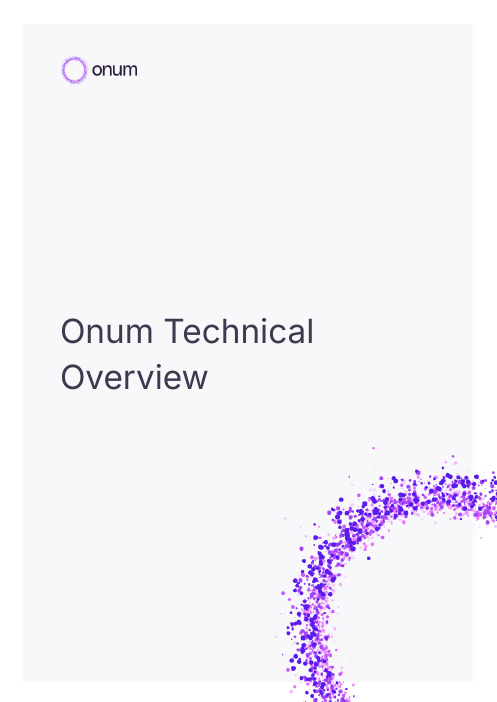
 03
Onum · Technical Sales Enablement
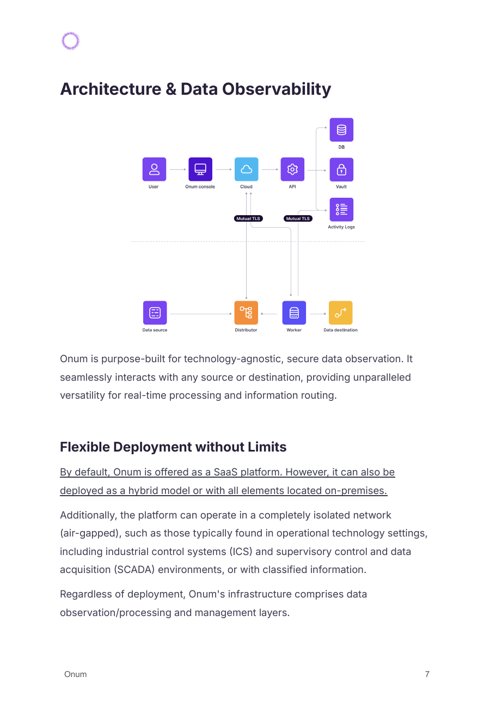
Onum Technical Overview
A 17-page guide structuring a complex real-time data platform for technical evaluation and enterprise conversations.
View the work



Does Marketing need to become a stronger commercial advantage?
If the next stage depends on clearer positioning, stronger enterprise GTM, or a Marketing function built around what the business needs next, let’s discuss the situation.